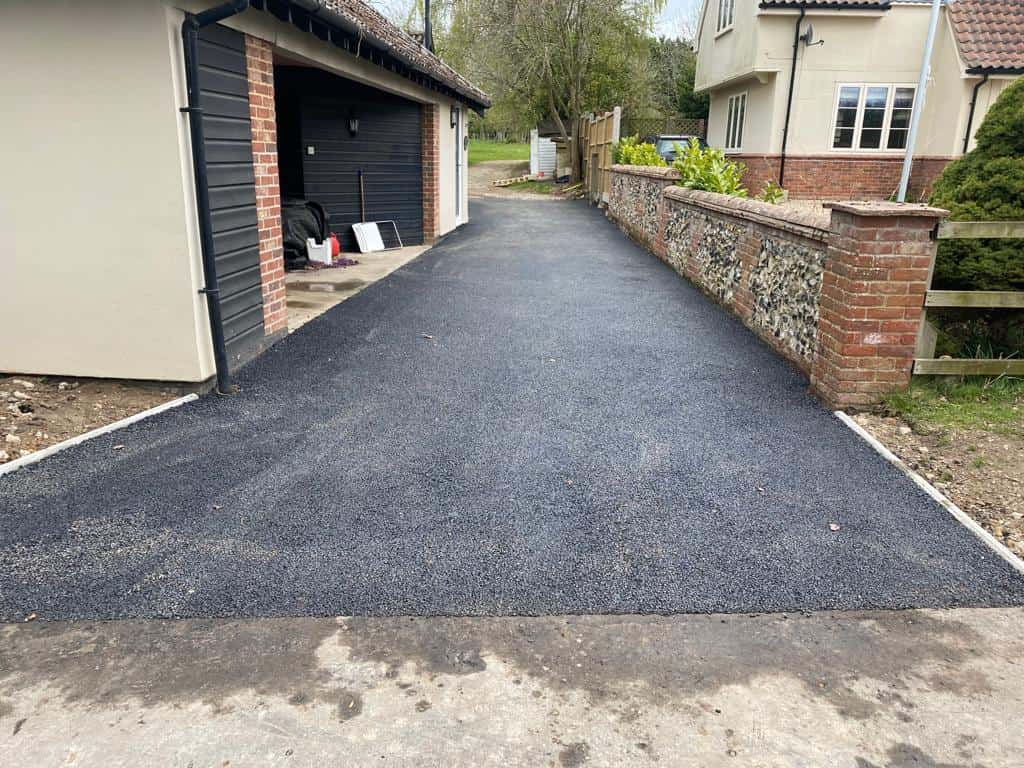
What Causes Thin or Worn Areas on Tar and Chip Driveways?
Tar and chip driveways combine a bituminous binder with a layer of stone chippings to create a textured, practical surface. When properly installed over a stable base, the materials work together to provide grip, protect the underlying construction and give the driveway its distinctive appearance.
Over time, however, some areas may begin to look thinner than others. Loose stone can appear at the sides, darker patches of binder may become visible, or the surface may lose texture along regularly used vehicle routes. Understanding why this happens is essential before deciding how the driveway should be restored.
Why Tar and Chip Surfaces Wear Unevenly
Thin or worn patches are usually caused by a combination of surface pressure, installation quality, drainage and the condition of the layers beneath. The location and pattern of the wear can provide useful clues about its underlying cause.
Repeated Vehicle Movements
Driveway sections that experience the most tyre movement often wear sooner than quieter areas. This is particularly common near entrances, parking positions and turning points.
When a vehicle turns while moving slowly or remains stationary while the steering wheel is turned, its tyres can place sideways pressure on the chippings. Repeated manoeuvring may gradually loosen aggregate from the binder, leaving the surface smoother or thinner in concentrated areas.
Visible wheel tracks do not always mean the underlying base has failed, but they should be assessed if stone loss is increasing or the exposed surface is beginning to break up.
Poor Chipping Retention
The chippings must bond securely with the bituminous layer beneath them. If the binder does not provide sufficient adhesion, or if the stone is not embedded evenly, loose aggregate can be displaced soon after installation or during regular use.
Retention may be affected by:
- Uneven binder application
- Insufficient rolling or compaction
- Dust or moisture on the stone
- Delays between applying the binder and spreading the chippings
- An unsuitable balance between binder and aggregate
- Surface contamination during installation
Some loose chippings can be expected after the surface is first laid, but persistent loss from specific areas may indicate that the materials have not bonded consistently.
An Uneven or Unstable Base
A tar and chip finish relies on the construction beneath it for stability. If the base is poorly compacted, uneven or already deteriorating, movement can transfer into the surface.
Weak areas may sink slightly under vehicle loads, causing the binder and chippings to flex or separate. The first visible sign might be a worn patch, but the underlying issue may involve the supporting layers rather than the surface alone.
Signs of possible base movement include:
- Localised depressions
- Cracking around worn sections
- Water collecting in shallow areas
- Unevenness underfoot or beneath vehicle tyres
- The same patch deteriorating after previous attention
Applying more chippings without stabilising the base is unlikely to provide a lasting result.
Standing Water and Poor Drainage
Water can accelerate the deterioration of any driveway surface. On tar and chip driveways, standing water may work into weak points and reduce the support beneath the affected area.
Drainage problems can result from insufficient falls, sunken sections, blocked channels or changes to the surrounding ground. If water repeatedly gathers in the same place, the surface may lose stone, soften or develop shallow depressions.
A proper inspection should therefore consider how water reaches and leaves the driveway, not just the appearance of the worn patch.
Ageing of the Binder
The bituminous binder changes as it is exposed to sunlight, temperature variations and regular use. It can gradually become less flexible and less effective at holding the surface aggregate.
Age-related wear is often more widespread than damage caused by a single local fault. The driveway may appear faded, increasingly smooth or thin across several areas, with loose stones collecting at the edges.
When the binder has deteriorated throughout the surface, isolated patching may produce an uneven appearance and may not address the wider loss of performance.
Heavy or Concentrated Loads
Parking repeatedly in the same position places regular pressure on particular sections of the driveway. Heavier vehicles can intensify this effect, especially where the base was not designed or prepared for concentrated loads.
Damage may develop beneath tyres, near parking points or along a narrow access route. If the surface is also affected by turning movements, the chippings can become polished, displaced or embedded more deeply into the binder.
Edge Deterioration
The edges of a driveway are more exposed than the centre and may have less support from surrounding material. Vehicles travelling too close to the boundary can cause aggregate to loosen and the surface to crumble.
Erosion of nearby soil or gravel can also remove support from beneath the edge. Without a stable boundary, the worn area may gradually spread inwards.
Maintenance That Is Too Aggressive
Forceful pressure washing, harsh scraping and unsuitable mechanical cleaning can dislodge surface chippings. Tar and chip should be cleaned with methods appropriate to its textured finish.
Care is also needed when removing weeds, moss or debris. The aim should be to clean the surface without disturbing sound aggregate or damaging the binder beneath it.
Can Thin or Worn Areas Be Repaired?
Localised wear may be repairable when the surrounding surface and base remain stable. The affected section must first be examined to determine whether the problem is limited to lost chippings or extends into the supporting construction.
Depending on the findings, suitable work may include:
- Reinstating a localised surface section
- Correcting weak or sunken base material
- Improving the support around an edge
- Addressing a drainage problem
- Treating a wider area where wear is no longer isolated
The new materials must bond properly with the existing surface. Simply scattering loose stone over a worn patch will not restore the driveway because the chippings need a suitable binder to hold them securely.
When Is a Wider Treatment More Suitable?
A broader surface treatment may be more appropriate when thin patches appear across several areas or the existing binder has deteriorated extensively. Widespread stone loss, recurring repairs and multiple depressions can indicate that the driveway should be assessed as a complete system.
A professional inspection can distinguish between isolated surface wear and a more general decline. This helps ensure that the proposed work addresses the cause rather than temporarily covering the symptoms.
Conclusion
Thin or worn areas on a tar and chip driveway can result from repeated vehicle movements, poor chipping retention, base instability, drainage issues, ageing materials or weakened edges. The pattern of damage is often the key to identifying what is happening beneath the visible surface.
Early assessment can prevent a small area of wear from spreading and establish whether a local repair or wider treatment is more appropriate. Tenterden Driveways provides professional tar and chip driveway assessments and surfacing services in Tenterden, Kent. If your driveway is losing stone or developing worn patches, contact the team to arrange an inspection.
Call us on: 01580 239 596.
Click here to find out more about Tenterden Driveways
Click here to complete our contact form and see how we can help with your driveway needs.