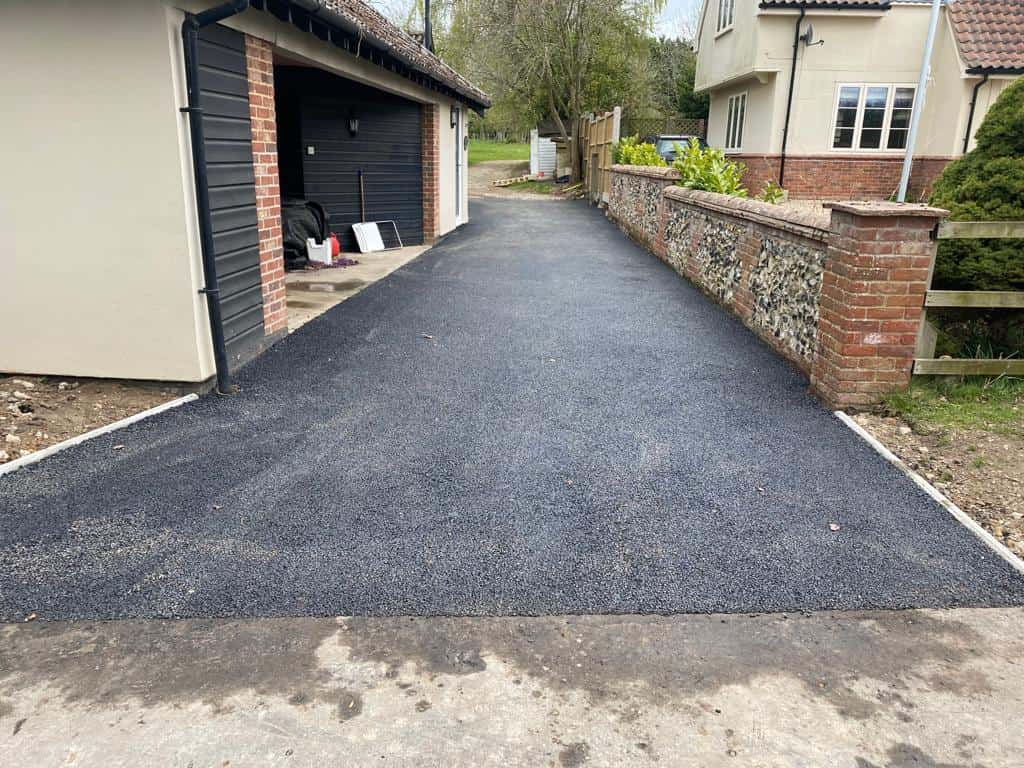
What Are the Most Common Causes of Tar and Chip Surface Damage?
Tar and chip surfacing is valued for its durable construction, natural appearance, and ability to provide reliable traction for driveways and other access areas. When properly installed on a well-prepared base, it can withstand regular use and changing weather conditions effectively. However, like any external surface, tar and chip can eventually develop signs of deterioration.
Understanding why damage occurs is useful because problems visible at the surface are not always caused by the surface layer itself. Drainage, ground movement, traffic patterns, installation quality, and general wear can all influence long-term performance. For property owners in Tenterden, Kent, recognising these factors can help ensure that deterioration is assessed and addressed before it becomes more extensive.
At Tenterden Driveways, we understand the importance of looking beyond visible damage to establish why a tar and chip surface is beginning to deteriorate.
1. Weak or Unstable Foundations
One of the most significant causes of surfacing problems is movement beneath the finished layer.
A tar and chip surface depends on the strength of the underlying construction. If the sub-base has not been prepared or compacted correctly, sections can gradually settle under repeated use.
This may result in:
- Depressions developing in the surface
- Cracking caused by movement
- Uneven areas
- Localised deterioration under vehicle traffic
Repairing the visible surface without addressing an unstable foundation may mean the same problem eventually returns.
2. Poor Drainage
Water management has a major influence on the lifespan of outdoor surfacing.
A driveway should be designed so that rainwater does not repeatedly collect in vulnerable areas. Persistent standing water can find its way into small imperfections and affect the layers beneath.
If the underlying material becomes weakened or displaced, the surface above may begin to sink, crack, or break apart.
Correct levels and suitable drainage therefore need to be considered as part of the overall construction rather than as an afterthought.
3. Repeated Vehicle Movement
Tar and chip is suitable for vehicle traffic, but particular sections of a driveway often experience much greater stress than others.
Areas where vehicles regularly turn, brake, accelerate, or manoeuvre can be subjected to increased forces. Tight steering movements can be particularly demanding because tyres apply sideways pressure to the surface rather than simply travelling across it.
Over time, these high-use areas may begin to show wear before quieter sections of the driveway.
4. Loose Aggregate
Tar and chip surfacing is created by applying aggregate onto a bituminous binder. Correct application allows the stone to become securely embedded while retaining the distinctive textured finish.
Some initial loose stone can be expected with this type of surface. However, excessive aggregate loss may indicate that an area is not performing as intended.
Possible contributing factors include repeated turning movements, surface ageing, or problems with the original application.
A professional assessment can establish whether the condition is normal or requires attention.
5. Ground Movement
The ground beneath a driveway is not always completely static.
Changes within the underlying soil can cause movement, particularly where the original ground conditions vary across the site. If one section settles differently from another, stress can transfer through the base and eventually become visible at surface level.
This is why careful preparation is such an important part of professional driveway construction.
6. Weather Exposure
Outdoor surfaces in Tenterden, Kent, must cope with changing conditions throughout the year.
Repeated wetting, drying, temperature changes, and periods of colder weather gradually place stress on surfacing materials. Where small defects already exist, weather exposure can accelerate their development.
Water entering a minor crack, for example, may contribute to deterioration beneath the surface and gradually enlarge the affected area.
Good installation cannot prevent weather altogether, but it can help the surface withstand normal seasonal conditions more effectively.
7. Edge Deterioration
The edges of a driveway can be particularly vulnerable if they are not properly supported.
Vehicle tyres passing repeatedly over unsupported edges may gradually cause sections to crumble or move. Once deterioration begins at the edge, it can slowly progress further into the driveway.
Appropriate edge construction helps contain the surfacing materials and maintain a clearly defined boundary.
8. Vegetation and Organic Growth
Plants can sometimes establish themselves around weakened edges or existing cracks.
Small roots may take advantage of gaps that are already present, while moss and other organic growth can retain moisture on shaded sections of the surface.
Vegetation is not necessarily the original cause of deterioration, but it can make an existing weakness more noticeable and contribute to further disruption.
9. Delayed Repairs
Small defects are generally easier to manage when identified early.
A minor crack or damaged edge may initially affect only a limited area. If water and repeated traffic continue to act on that weakness, however, the affected section can gradually become larger.
Timely repairs help preserve surrounding areas that remain in good condition.
10. Poor Initial Installation
Many long-term surfacing problems can be traced back to the way the driveway was originally constructed.
Tar and chip installation requires more than simply applying binder and aggregate. The condition of the existing ground, sub-base construction, drainage, levels, edge support, material application, and compaction all influence the final result.
Shortcuts during any of these stages can reduce the durability of the completed surface.
Why Identifying the Cause Matters
Effective repairs should address why deterioration has occurred, not simply improve its appearance.
For example, resurfacing an area affected by continuing ground movement may conceal the problem temporarily without providing a lasting solution. Similarly, repairing a damaged section without correcting poor drainage may allow water to continue affecting the same location.
A professional inspection considers both the visible defect and the condition of the surrounding driveway before determining the most appropriate approach.
Protecting a Tar and Chip Surface
Good maintenance can help a correctly installed surface continue performing effectively.
Property owners should pay attention to developing cracks, unusual areas of loose aggregate, standing water, depressions, damaged edges, and sections that appear to be changing more rapidly than the rest of the driveway.
The important point is not to assume that every imperfection means widespread failure. Some issues remain localised and can be addressed effectively when assessed at an early stage.
The Value of Professional Surfacing Work
The long-term performance of tar and chip depends heavily on correct preparation and installation.
At Tenterden Driveways, we take a complete approach to driveway and surfacing work. Ground conditions, drainage, base preparation, levels, edges, and the finished surface all need to work together to produce a durable result.
Whether an existing tar and chip driveway requires attention or a new surface is being considered, assessing the entire site helps ensure that the work addresses its actual requirements rather than focusing only on what is visible.
Conclusion
Tar and chip is a practical and durable surfacing option, but its performance depends on the condition of the entire construction beneath it. Weak foundations, poor drainage, repeated vehicle movements, ground settlement, weather exposure, unsupported edges, and delayed maintenance can all contribute to deterioration.
Understanding the underlying cause is therefore essential before deciding how a damaged surface should be treated. A professional assessment can determine whether the issue is isolated to the surface or connected to a deeper problem that also needs attention.
For property owners in Tenterden, Kent, Tenterden Driveways provides professional driveway and surfacing services with a focus on correct preparation, durable construction, and long-term performance. If your tar and chip surface is beginning to show signs of deterioration, contact our team to arrange an assessment and discuss the most appropriate way to restore it.
Call us on: 01580 239 596.
Click here to find out more about Tenterden Driveways
Click here to complete our contact form and see how we can help with your driveway needs.